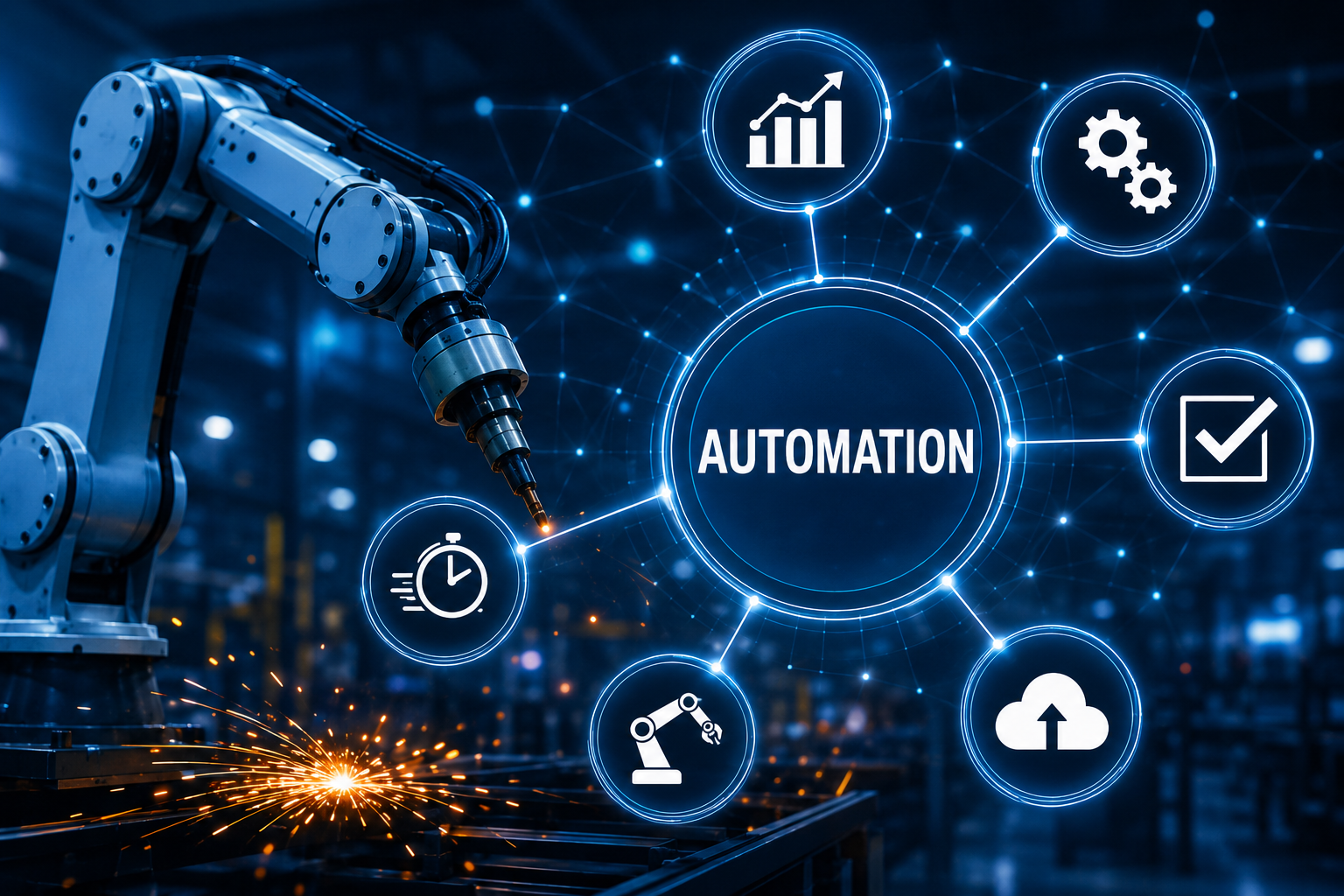

Automation at Work at Pluntum Enterprise
At Pluntum Enterprise, automation is not just a technical upgrade—it is a core shift in how modern workplaces operate, make decisions, and deliver value. As organizations continue to face pressure to improve efficiency, reduce costs, and eliminate manual errors, automation has become a key driver of transformation across business processe

s.
What Automation Means at Pluntum Enterprise
Within Pluntum Enterprise, automation refers to the use of digital systems, software workflows, and intelligent tools to perform repetitive or rule-based tasks that were traditionally done manually. These include data entry, reporting, workflow approvals, customer communication, and system integrations.
The goal is simple: allow people to f
ocus more on decision-making, strategy, and problem-solving while machines handle routine operations.
Key Areas Where Automation is Applied
1. Workflow Automation
Processes such as approvals, document routing, and task assignments are automated to ensure speed and consistency. Instead of waiting for manual intervention, tasks move automatically from one stage to another based on predefined rules.
2. Data Management and Reporting
Automation tools collect, clean, and organize data from different systems, reducing human error. Reports that once took hours or days can now be generated in real time, improving
decision-making speed.
3. Communication Systems
Automated emails, notifications, and alerts ensure that employees and clients receive timely updates. This improves coordination across departments and enhances customer experience.
4. System Integration
Different business systems such as HR, finance, and operations are connected through automation tools. This eliminates duplication of work and ensures that information flows smoothly across platforms.
5. Customer Service Automation
Chatbots, ticketing systems, and automated response systems help handle customer inquiries quickly, even outside working hours.
Benefits of Automation in the Workplace
Improved Efficiency
Tasks that previously took hours can now be completed in seconds, significantly increasing productivity.
Reduced Human Error
Automation ensures consistency and accuracy in data handling and process execution.
Cost Savings
By reducing manual workloads, organizations can optimize staffing and operational costs.
Better Decision-Making
Real-time data and analytics enable leaders to make faster and more informed decisions.
Scalabilit
yAs the business grows, automated systems can handle increased workloads without requiring proportional increases in staff.
Challenges to Consider
While automation offers many advantages, it also comes with challenges:
- Initial setup and implementation costs
- Need for staff training and adaptation
- Resistance to change from employees
- Dependence on system reliability and infrastructure
Pluntum Enterprise addresses these challenges by focusing on gradual implementation, user training, and building user-friendly systems that integrate smoothly into existing workflows.
The Future of Automation at Pluntum Enterprise
The future of automation at Pluntum is expected to move toward more intelligent systems powered by data analytics and artificial intelligence. This includes predictive analytics for decision-making, smarter workflow engines, and deeper integration across all business operations.