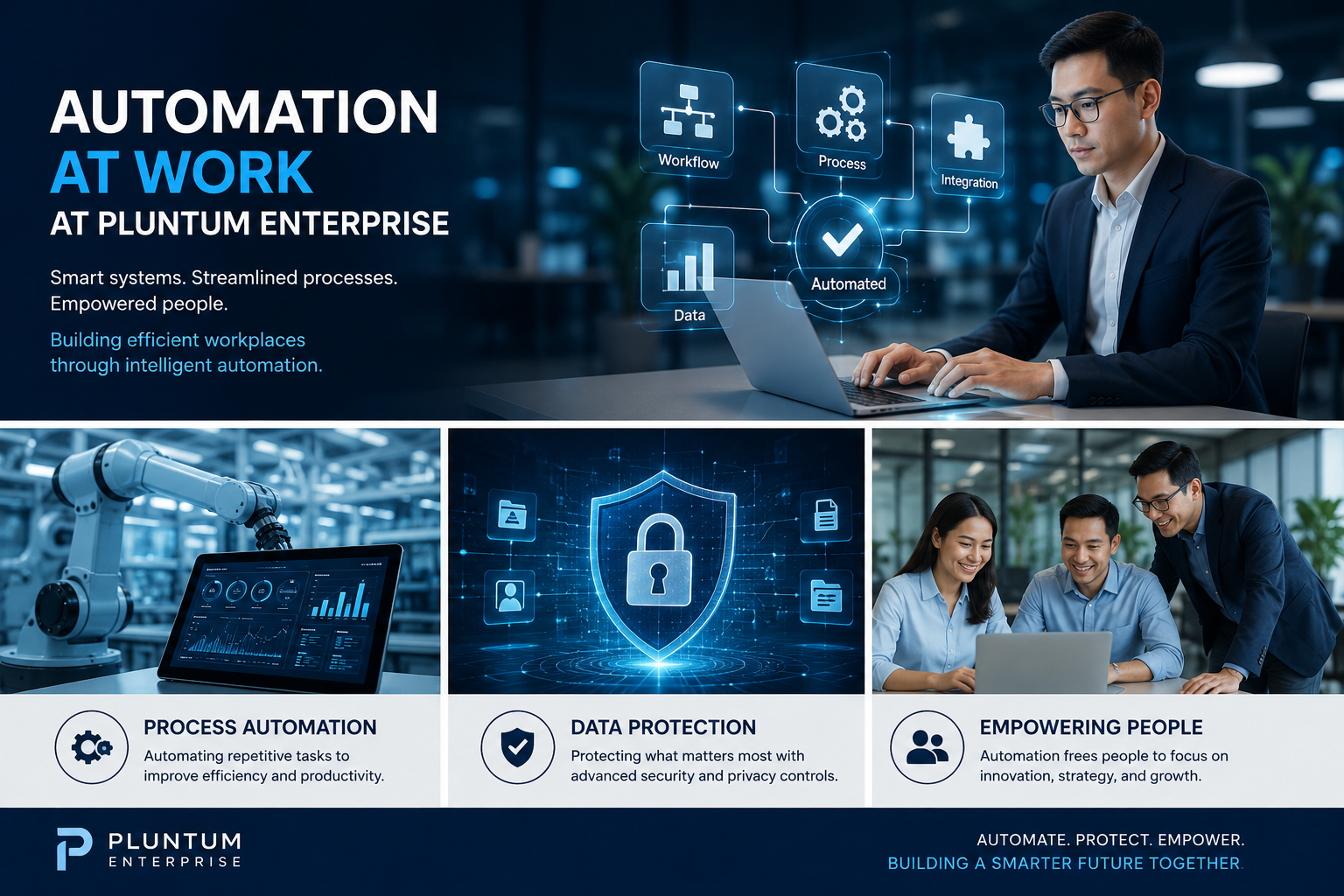

Data Protection at Pluntum Enterprise
In today’s digital workplace, data has become one of the most valuable business assets. At Pluntum Enterprise, protecting this data is a core part of how modern information systems are designed, deployed, and managed.
Within Pluntum Enterprise, data pro
tection is not treated as an optional feature—it is built into every system from the ground up to ensure confidentiality, integrity, and availability of business information.

What Data
Protection
Means at Pluntum
Data protection refers to
the policies, technologies, and processes used to safeguard sensitive business and customer information from:
-
- Unauthorized access
- Data loss or corrupt
- ion
- Cybersecurity threats
- System failures
- Human error
The goal is to ensure that data remains secure, accurate, and accessible only to authorized users.
Key Principles of Data Protection
1. Confidentiality
Only authorized users can access specific data based on their roles and permissions. This prevents misuse or exposure of sensitive information.
2. Data Integrity
Systems are designed to ensure that data remains accurate and unaltered unless changes are made by authorized users through controlled processes.
3. Availability
Important business data must be accessible whenever it is needed. Backup systems and redundancy measures ensure minimal downtime.
How Data Protection is Implemented
1. Access Control Systems
User roles and permission
s are strictly defined to ensure that employees only access the data relevant to their responsibilities.
2. Encryption
Sensitive data is encrypted both in transit and at rest, ensuring that even if intercepted, it cannot be read without proper authorization.
3. Secure System Architecture
Business applications are built with layered security models that protect against unauthorized intrusion and system vulnerabilities.
4. Backup and Recovery Systems
Regular automated backups ensur
e that data can be restored quickly in the event of system failure or accidental loss.
5. Monitoring and Audit Trails
System activities are logged and monitored to detect unusual behavior, ensuring accountability and traceability of all actions.
Benefits of Strong Data Protection
Increased Trust
Clients and stakeholders are more confident when their data is securely managed.
Regulatory Compliance
Strong data protection practices help meet industry and legal compliance requirements.
Reduced Risk
Minimizes the risk of cyberattacks, data breaches, and operational disruptions.
Business Continuity
Ensures operations continue smoothly even in the event of technical failures.
The Future of Data Protection at Pluntum Enterprise
The future of data protection at Pluntum Enterprise is moving toward more advanced, intelligent security systems, including:
- AI-driven threat detection
- Real-time security monitoring
- Automated ris
- k response systems
- Zero-trust architecture models
These innovations aim to create a secure digital environment where businesses can operate confidently without compromising data safety.
Conclusion
Data protection at Pluntum Enterprise is a foundational pillar of modern digital transformation. By embedding security into every layer of system design, businesses can operate efficiently while ensuring their most valuable asset—data—remains fully protected.